
Why Your Cloud Initiative Needs Infrastructure Strategy

Without careful planning and thoughtful design, modernized infrastructure can quietly accumulate risk. Many companies that move to cloud-based solutions simply put their old architecture into a new container. Without a plan for reorganizing their data or creating more efficient systems, they face the same problems they had using legacy solutions. The cloud can’t guarantee security either: teams need to prioritize zero-trust, thorough access management, and cybersecurity hygiene.
The goal isn’t implementing the latest platform, it’s architecting an environment that fits the way your business operates and adapts to risks like cyberthreats and outages. In this article, we’ll discuss why modern platforms and cloud-based solutions still fail and how infrastructure strategy can help businesses ensure their new architecture stands the test of time.
Leading Cloud-Based Platforms Can’t Promise Perfection
Cloud, SaaS, and enterprise-grade platforms are more accessible than ever, yet reliability issues, outages, and cybersecurity incidents persist. Even the largest names in the market aren’t immune. Between 2024 and 2025, major cloud providers Microsoft Azure, Google Cloud, and AWS experienced over 100 service outages combined. As a proactive measure, some companies are opting to purchase a local server or keep an on-premesis server as backup. Others just ride out the storm.
At the level of the organization, many businesses still experience unplanned downtime despite making the move to more modern, cloud-based solutions. A Cockroach Labs survey reported that businesses are averaging about 86 outages per year, with most outages in larger enterprises lasting an hour or more.
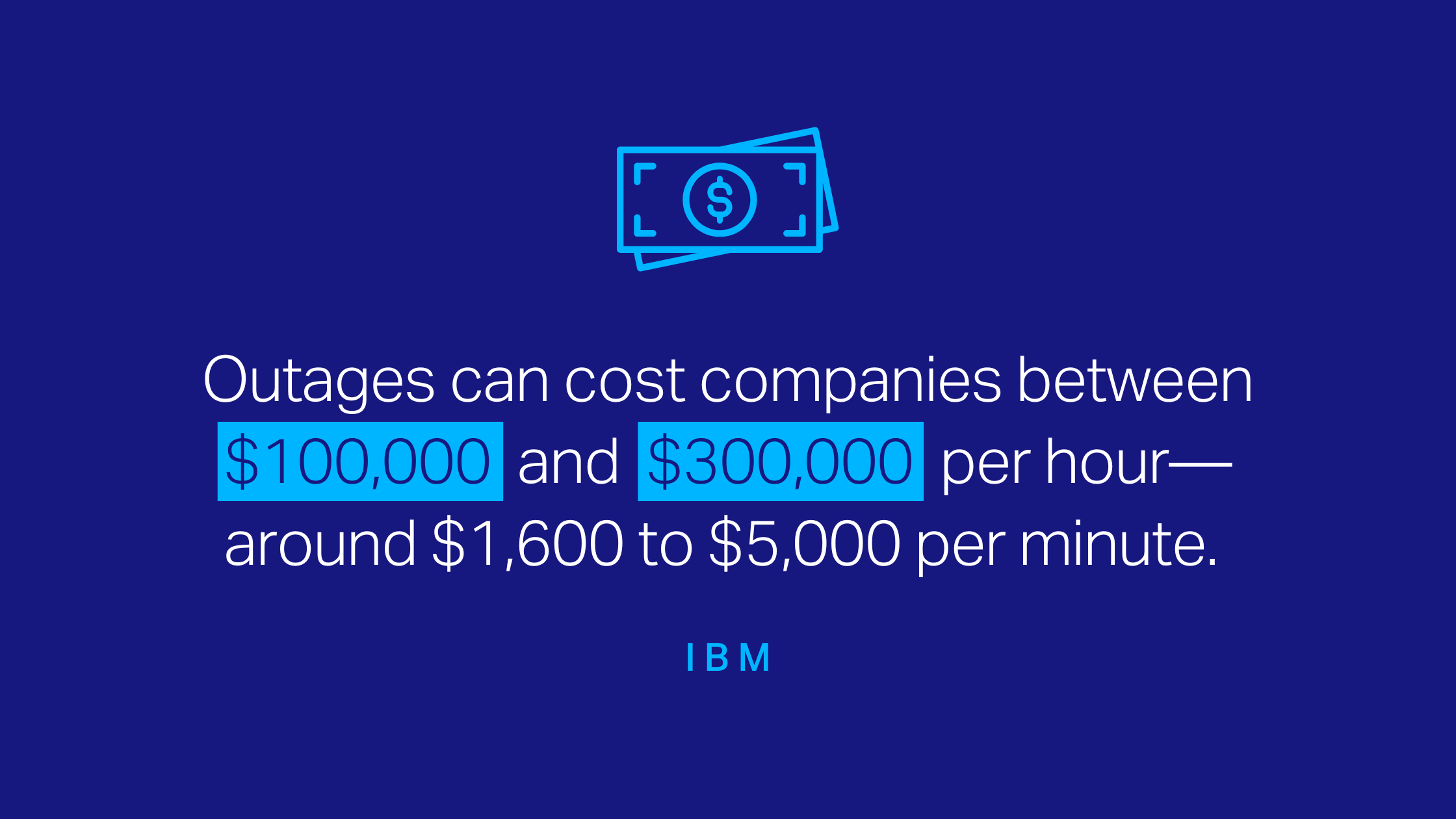
Downtime isn’t just frustrating for the IT department, it has a track record of biting into the bottom line. While exact figures depend on the business, downtime definitely isn’t cheap for anyone. The Cockroach Labs survey found that every outage cost respondents between $100,000 and $1 million. In 2024, IBM said that outages can cost companies between $100,000 and $300,000 per hour—around $1,600 to $5,000 per minute—and Splunk reported that it costs Global 2000 companies up to $540,000 per hour, or $9,000 a minute. A more recent 2025 report from New Relic found that outages that cause an operational shutdown can cost companies up to $33,000 per minute.
From microwaves to cars, there isn’t a technology that doesn’t break or require maintenance. Modern enterprise and cloud solutions are no different. IT teams need to understand that without preparation and a clear, long-term roadmap, their implementation can slowly put the business at risk.
How Infrastructure Starts Accumulating Risk Right Out of the Gate
Adopting the latest enterprise-grade, cloud-based platform isn’t a silver bullet. Here’s what IT teams need to understand about modernization efforts:
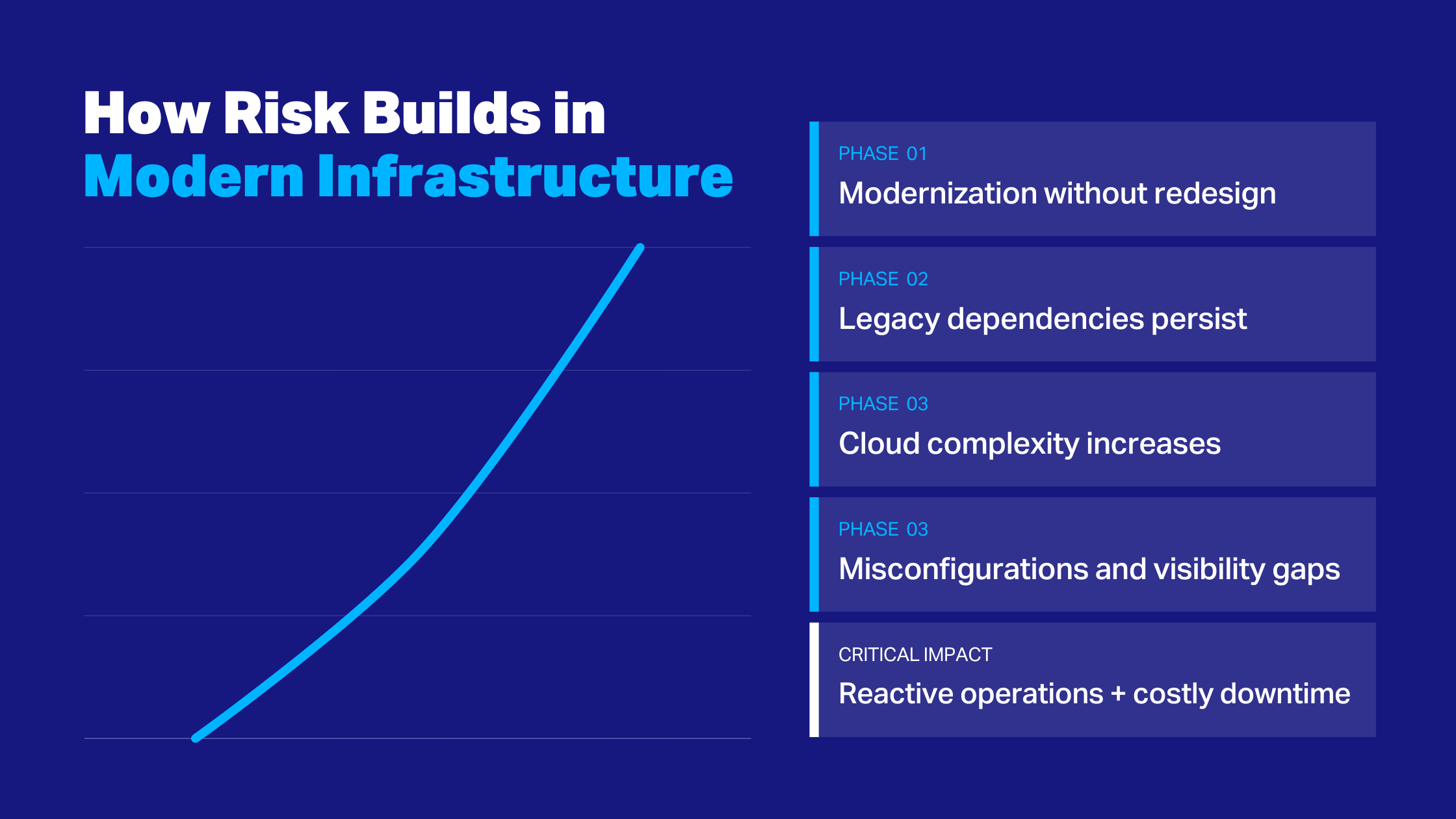
Moving to the cloud is only a prerequisite for optimization
Adopting a new enterprise-grade platform or moving existing infrastructure to the cloud is only the first step in a process that’s much longer and more labour-intensive than many teams realize.
Simply placing data and systems into a cloud-based environment doesn’t automatically make them more efficient. Significant planning and design is needed to maximize cloud capabilities. If teams don’t take the time to look at existing gaps in their architecture or issues with how data is organized, those problems will persist in the cloud.
A platform like Microsoft Azure offers hundreds of cloud-based solutions. Teams also need to take the time to understand which solutions could benefit their organization and create a big-picture plan for implementing and configuring them to drive results. None of this work happens automatically overnight when the cloud migration is complete.
Human oversight and misconfigurations lead to serious vulnerabilities
IBM cites cloud misconfigurations as one of the leading causes of security incidents. Cloud environments are complex, and different services can have unique security settings. During an intensive migration—or a hasty tool addition—it’s easy to set up individual services with weak access controls and authentication methods or miss establishing the right permissions.
According to Crowdstrike, common gaps include unrestricted outbound access, disabled logging and missing alerts, exposed access keys, excessive permissions, and neglected cloud infrastructure. Structural issues like open databases and storage containers, ineffective identity architecture, and poor public access configuration also made the list.
While some teams may be tempted to mitigate risk with AI-driven solutions for threat detection and response, automation can’t fix cracks in security posture. These issues require human judgement, strategy, and intervention. Zero-trust and user training are still essential for securing the cloud.
Cloud complexity makes monitoring and management more challenging
Cloud infrastructure is distributed and, in many cases, constantly changing. Teams that don’t have a strong culture of documentation will find it even more difficult to manage a growing volume of assets like APIs and storage buckets. Without a clear process and consistent documentation to refer to, they’ll also have a hard time consistently applying security controls as more services and solutions are added. There’s also the risk that legacy services are left behind, remaining exposed as the organization moves onto new tools.
Some teams assume that their cloud provider will facilitate tasks like identity and access management and patching. Teams that have implemented security solutions can find themselves inundated with alerts, firefighting issues caused by misconfiguration at the outset or brought on by increasing complexity within the environment as time goes on. The more complexity, the more important it is that teams have clarity around who is responsible for resilience: from incident response and escalation to improving security protocols and strengthening architecture going forward.
Designing Infrastructure for Resilience and Risk-Reduction
Resilient infrastructure is strategically planned and designed, it’s not an assembly of solutions that promise to solve your challenges out of the box. Modernization efforts result in more reliable, and more secure, systems when paired with a long-term infrastructure strategy that takes business goals into account. Even if your business has already moved to the cloud or you’re caught up in reactive tool implementations, it’s not too late to take a step back and reassess.
1. Understand business-critical systems, redundancies, and dependencies
Infrastructure strategy starts with visibility into what you already have and the gaps that are already present in your architecture. Some businesses choose to move over to a new platform and, rather than rebuilding current systems in the cloud, they leave legacy architecture to be phased out gradually.
If that’s the approach, they need to understand the business implications of leaving old architecture behind and risks associated with allowing legacy infrastructure to linger. Teams must determine which systems the business is most reliant upon, and which systems depend on those systems, to ensure that what’s vital is preserved and maintained.
2. Plan for disruption and failure
Resiliency means acknowledging that problems will arise so that you can build standard operating procedures and playbooks for recovery. Organizations are locked in a tight race with threat actors, and the cybersecurity landscape will continue its rapid transformation in the coming years. Businesses need to brace for new types of threats and malicious techniques. At the same time, they need to stay ready for cloud outages and localized downtime which are just part of doing work in a digital-first world.
It’s not easy to prepare for challenges ahead of time. Working with a professional services provider like IX Solutions gives you access to a team of experts who spend their time maintaining and troubleshooting issues for hundreds of businesses. With years of firsthand experience, they can provide guidance around what to prepare for, and how to do so effectively.
3. Align infrastructure with operations and risk tolerance
Infrastructure should ultimately support the way your business operates. Teams need to be able to get everyday work done as efficiently as possible, without disruptions caused by outages or breaches. Your business is unique, so infrastructure should be adapted and optimized around how work gets done in your organization.
Changes in the business like acquisitions and significant growth impact—and are impacted by—your infrastructure. The business’s ability to stay agile and scale effectively depend on the reliability of your systems. At IX Solutions, we work with your team to understand where you want your business to be in the next few years and set your infrastructure up to accommodate those goals.
4. Lay the foundation for continuous monitoring and optimization
Ongoing monitoring and maintenance ensures reliability and resilience over time. Without routine patching, regular audits, and continuous oversight, unchecked gaps compound into security risks, poor performance, and inevitable outages. Teams need to scope out this labour in their long-term plans with the knowledge that AI tools can only do so much—and that they aren’t a replacement for human initiative and accountability.
A managed services provider like IX Solutions can take the work of monitoring and maintaining your cloud infrastructure and security off your team’s plate, so you can focus on optimizing for growth.
Reframing the Goal: From Modernization to Adaptability
IT teams are swimming in a sense of urgency around migrating to the latest platform or investing in the most up-to-date tool. Sweet-talking vendor marketing campaigns, industry reports warning against evolving cyberthreats, and internal challenges like frequent breaches or outages—and increased pressure from leadership in the aftermath—leave teams looking for solutions just to get some peace of mind.
But if modernization efforts are rooted in a desire for a quick fix, they’ll only cause more trouble down the road. Organizations need to shift their North Star. Instead of modernizing for the sake of using the most innovative solutions, teams need to invest in carefully designing architecture and operational systems that can be adapted to meet the needs of the business over time. These systems also need to be responsive to the evolving cybersecurity landscape.
Resilience requires adaptability. Infrastructure needs to be designed with adaptability in mind from the beginning, otherwise it won’t be reliable.
Get Infrastructure Strategy Designed for the Way Your Business Grows
With IX Solutions, you can increase the efficacy and ROI of your modernization initiatives. IX Solutions provides a team of seasoned experts who have supported businesses of all kinds with infrastructure strategy for cloud migrations and platform implementations. We offer deep insight into common gaps and battle-tested solutions to fortify your security posture and ensure that your environment is ready for the future. Our team can spot issues and provide guidance on your next steps to help you get ahead of risks before they become vulnerabilities.
When you start off with architecture optimized for your business and air-tight security, your team doesn’t have to worry about fixing problems down the road. The IX Solutions team can also monitor and manage your environment as time goes on, so you can leave patching, troubleshooting, and maintenance to a team of trusted specialists.
Need support designing or optimizing your cloud-based infrastructure?Get in touch with our team for an assessment.