
More Tools Aren’t The Answer to Cyber Risk, Unified Security Posture Is

Achieving excellent cybersecurity is a moving, morphing target. While threat actors roll out increasingly sophisticated attacks using AI to scale credential theft and design more convincing scams, cybersecurity technology is becoming more complex and innovative in response. IT teams are tasked with deeply understanding both emerging risks and the tools available to mitigate them. When an incident happens—maybe an incident they’ve never encountered before—many fast-moving teams reach for the next new tool that promises to solve their issue as quickly and effectively as possible.
If teams continue to respond to problems by bringing in a new cybersecurity tool every time, it can lead to tool sprawl. Rather than protecting your business, relying on an increasing number of single-use cybersecurity tools magnifies risk.
In this article, we’ll talk about why tool sprawl happens and how it impacts your business. Then, we’ll discuss the solution: thinking big-picture and long-term about your security posture to get ahead in today’s evolving threat landscape.
How Teams Fall into the Tool Sprawl Trap
Cybersecurity tool sprawl happens when teams tack on point solutions, often to address urgent incidents, without considering where these solutions fit into their overall security architecture. According to a survey from IBM and Palo Alto Networks, organizations juggle an average of 83 cybersecurity solutions from 29 different vendors.
Cyberthreats are evolving faster than many organizations can keep up with. Many teams find themselves stuck reacting to the latest cybersecurity thought leadership and green-lighting new tools when they’re already in the midst of an incident or audit.
Growing teams and hybrid work introduce more devices, increasing vulnerabilities on an expanding edge. Plenty of companies are also managing general SaaS sprawl, widening the attack surface and introducing security gaps.
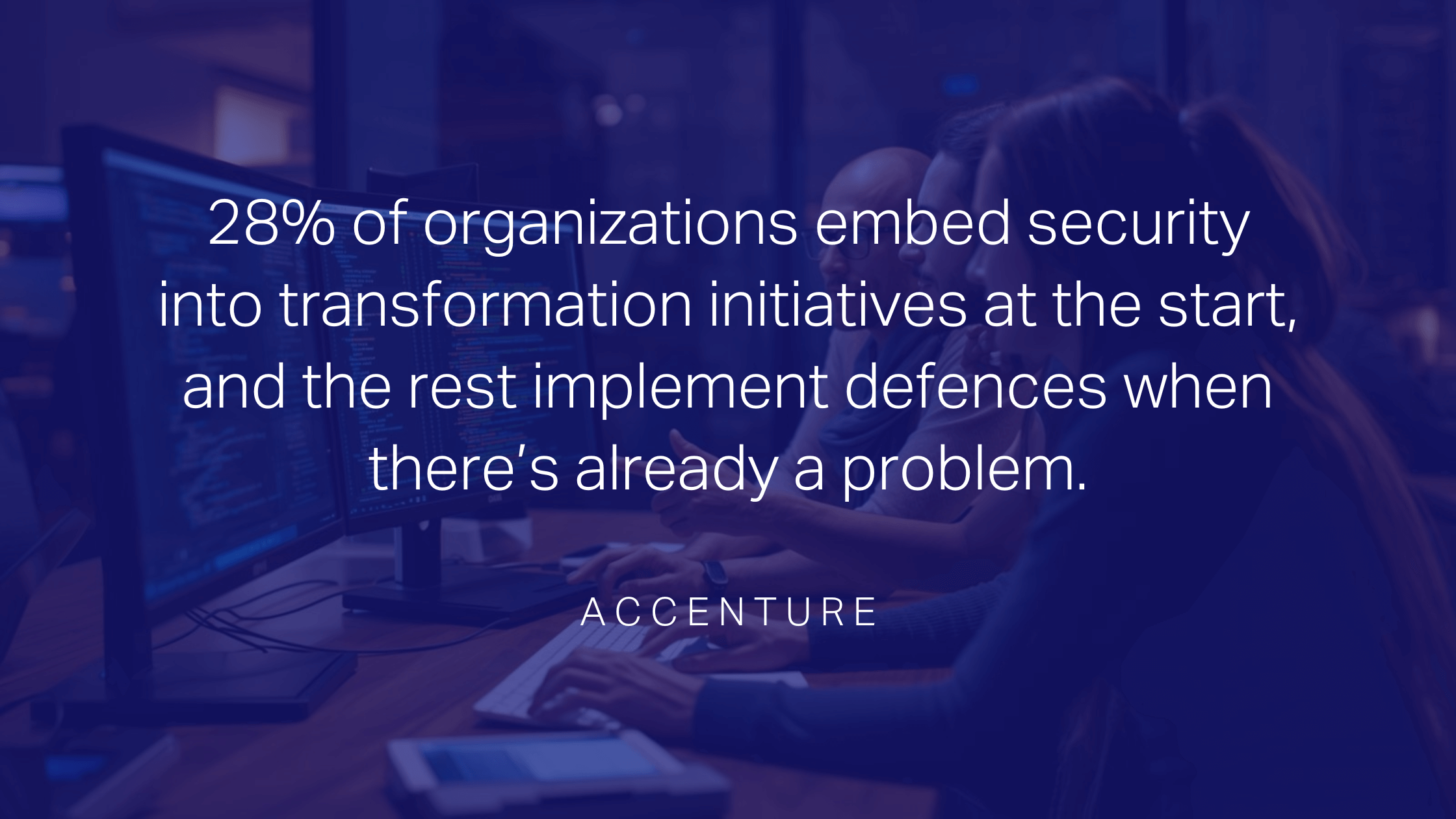
The reality is, teams are trying to lay tracks ahead of a moving train. Accenture found that just 28% of organizations embed security into transformation initiatives at the start, and the rest implement defenses when there’s already a problem.
Even when the goal is to strategically implement full-coverage modern security architecture, it’s challenging for teams to work holistically when new gaps and threats appear as soon as the last incident is resolved. It’s especially challenging for lean IT teams that also juggle support, maintenance, and business-critical issues like outages on top of cybersecurity.
Tool sprawl is a symptom of the current threat landscape and the pressure teams are under to manage complex environments. Left unaddressed, tool sprawl can quickly erode your security posture, rack up expenses, and even chip away at your team’s well-being.
The Risks of Having Too Many Tools
Implementing more tools can give you a false sense of security. Cybersecurity tools should be assets that drive ROI. But the more tools your team invests in, the greater the liability to both your security posture and your operations.
1. Gaps between tools are easier to exploit
The more solutions your team has to manage, the harder it is to monitor, patch, and update everything. If tools are poorly integrated, you might not have adequate visibility into your vulnerabilities. A survey from The Sequence reported that 41% of IT professionals link weak integrations to higher security risk. Cybersecurity data is siloed, making it almost impossible to assess risk in real time while making the audit process time-consuming and error-prone. These gaps can leave you wide open to the next attack.
2. Point solutions perpetuate reactivity
Every time a tool is added, new gaps are created, and teams are forced to troubleshoot new issues and address fresh vulnerabilities—perpetuating the reactivity cycle. Constantly implementing new solutions makes it hard for teams to plan ahead and be proactive about threats. If there’s a new tool to implement and learn every week, teams don’t have time to optimize the solutions they already have. When they need a quick fix, they can’t be confident in their current stack, which impacts time-to-resolution and the quality of remediation.
3. Inefficiency cuts into the bottom line
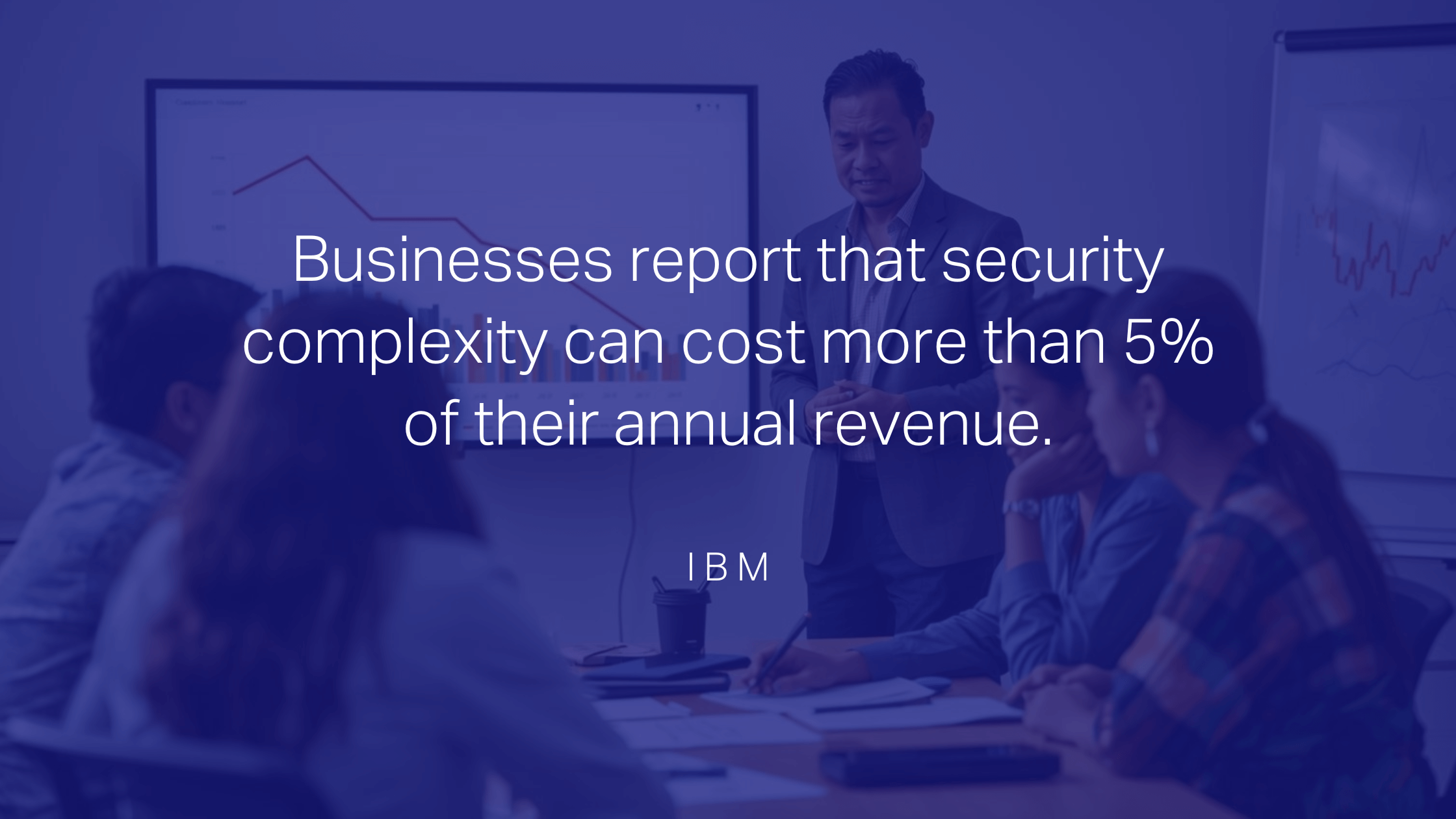
Complexity slows teams down and prevents them from focusing on initiatives that add value to the business. Hiring expensive specialists to manage tools, using costly labour on maintenance and firefighting, and constantly searching for, implementing, and subscribing to brand-new tools quickly adds up. Businesses report that security complexity can cost more than 5% of their annual revenue.
4. Employees leave the team after burning out
Managing too many tools has a significant impact on team members’ mental health and sense of satisfaction at work. The Sequence survey also revealed that 50% of teams with more than 16 cybersecurity tools report high rates of burnout. Sophos found that 38% of cybersecurity workers cite constant changes in cybersecurity defence solutions as the top cause of burnout. Exhausted workers are more likely to leave their roles, which means companies lose talent along with valuable sources of internal knowledge.
What Effective Cybersecurity Looks Like Today
An ever-expanding stack of tools isn’t the answer to the rapidly evolving cybersecurity challenges today’s organizations face. Instead, they need to adopt a cohesive cybersecurity strategy and transition to unified tools that make it easy for teams to proactively manage risk in one place. Rather than focusing on single incidents and solutions, teams need to prioritize the big picture: their security posture.
Security posture is an organization’s overall security status. Having a strong security posture means you’re continuously mitigating vulnerabilities and you have systems in place that allow you to respond effectively when incidents occur.
From Single-Use Tools to Unified Cybersecurity Solutions
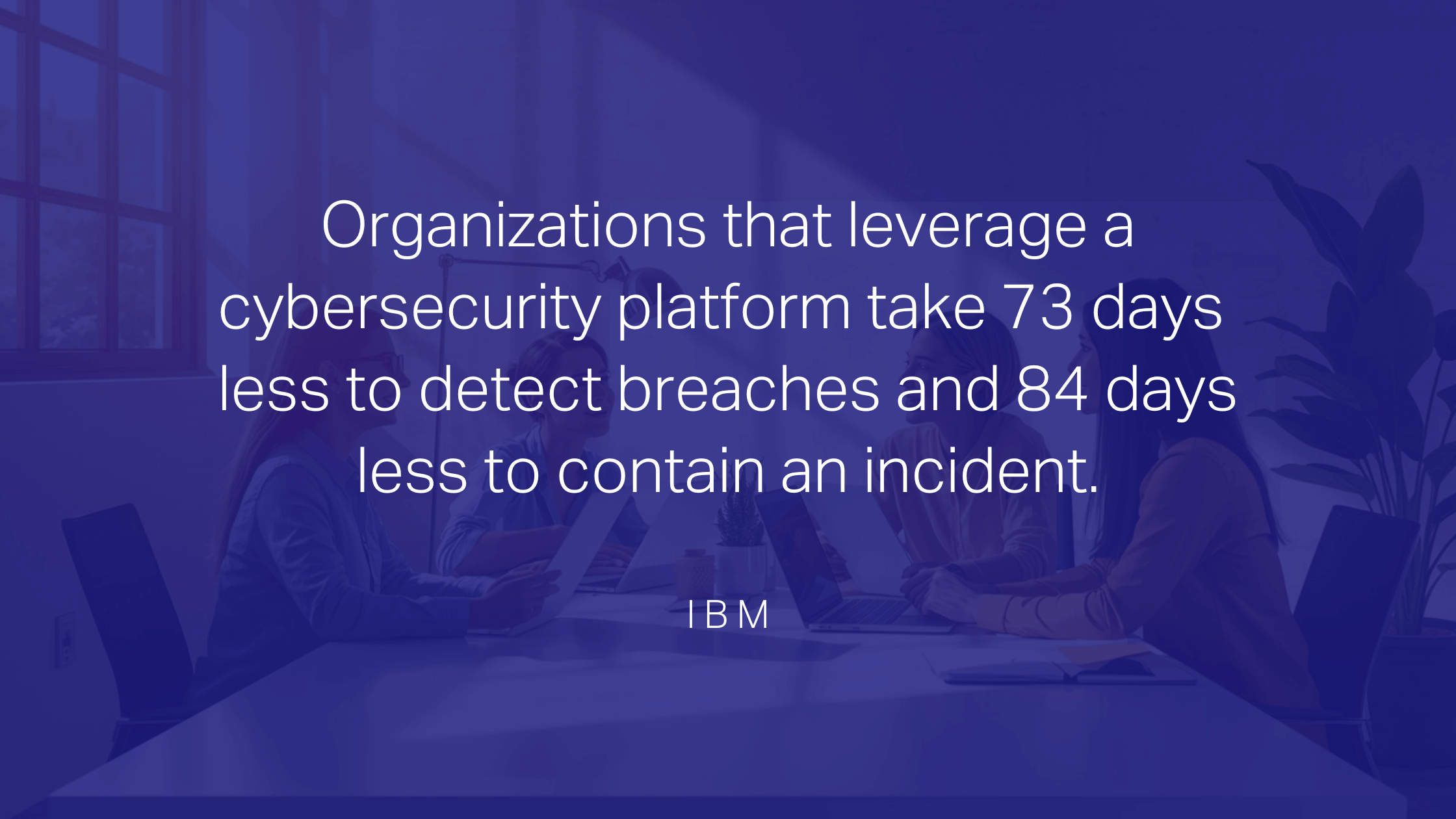
Moving to a single platform is a great starting point for improving your posture. IBM found that organizations that leverage a cybersecurity platform take 73 days less to detect breaches and 84 days less to contain an incident. Eighty percent of organizations that adopted platforms told IBM that they have full visibility into vulnerabilities and threats, while just 28% of non-adopters said they could do the same.
However, simply switching to a platform isn’t a silver bullet. Security architecture is the bedrock of security posture. Planning is essential. Where point solutions do provide endless flexibility, platforms need to be correctly implemented from the outset and continuously maintained. Teams need a clear road map that aligns with the business’s goals and they need to allocate resources to adapting the solution to meet the business’s needs as it grows.
This is where a managed service provider (MSPs) like IX Solutions can come in to provide the expertise and additional operational capacity teams need to transform their security posture. The IX Solutions team can assess your current state, provide tailored guidance, and support you through implementation and rollout.
Adopting a Modern Cybersecurity Mindset Across the Organization
Improving your security posture also includes educating your team and making cybersecurity hygiene a part of everyday life at work. Verizon’s 2025 Data Breach Investigations Report found that 60% of breaches involve the human element, which include incidents involving weak passwords, credential stuffing, and social engineering attacks like email phishing.
While cybersecurity solutions can facilitate guardrails like passwordless authentication, it’s critical that employees in every department understand the importance of adhering to new cybersecurity protocols. Good solutions should have robust access controls, but it’s up to IT and cybersecurity teams to decide who can access what data and how that data should be protected. Your cybersecurity platform should provide visibility and alerts about breaches, but teams also need to design an escalation plan with clearly defined roles and standards for communication.
Organizations that focus on both platform optimization and a cybersecurity-aware culture will be better prepared for the inevitable changes on the horizon.
Get Proactive About Strengthening Your Security Posture
A stack of siloed tools isn’t the answer. There’s a better way to protect your business from evolving cyberthreats. IX Solutions can help you understand where your vulnerabilities are and provide guidance around unifying your cybersecurity stack. When it’s time for rollout, we can help you ensure a smooth transition with minimal disruption. Our team is here to provide ongoing support with monitoring and maintenance, making your cybersecurity posture more robust and efficient as you go—instead of compounding risk over time.
Ready to move from reactive to proactive cybersecurity strategy? Get in touch with our team for an assessment and let our team of experts build a tailored roadmap to reach your security posture goals.
