
Vulnerability Detection and Response: How to Prioritize Alerts and Strengthen Your Organization’s Security Posture

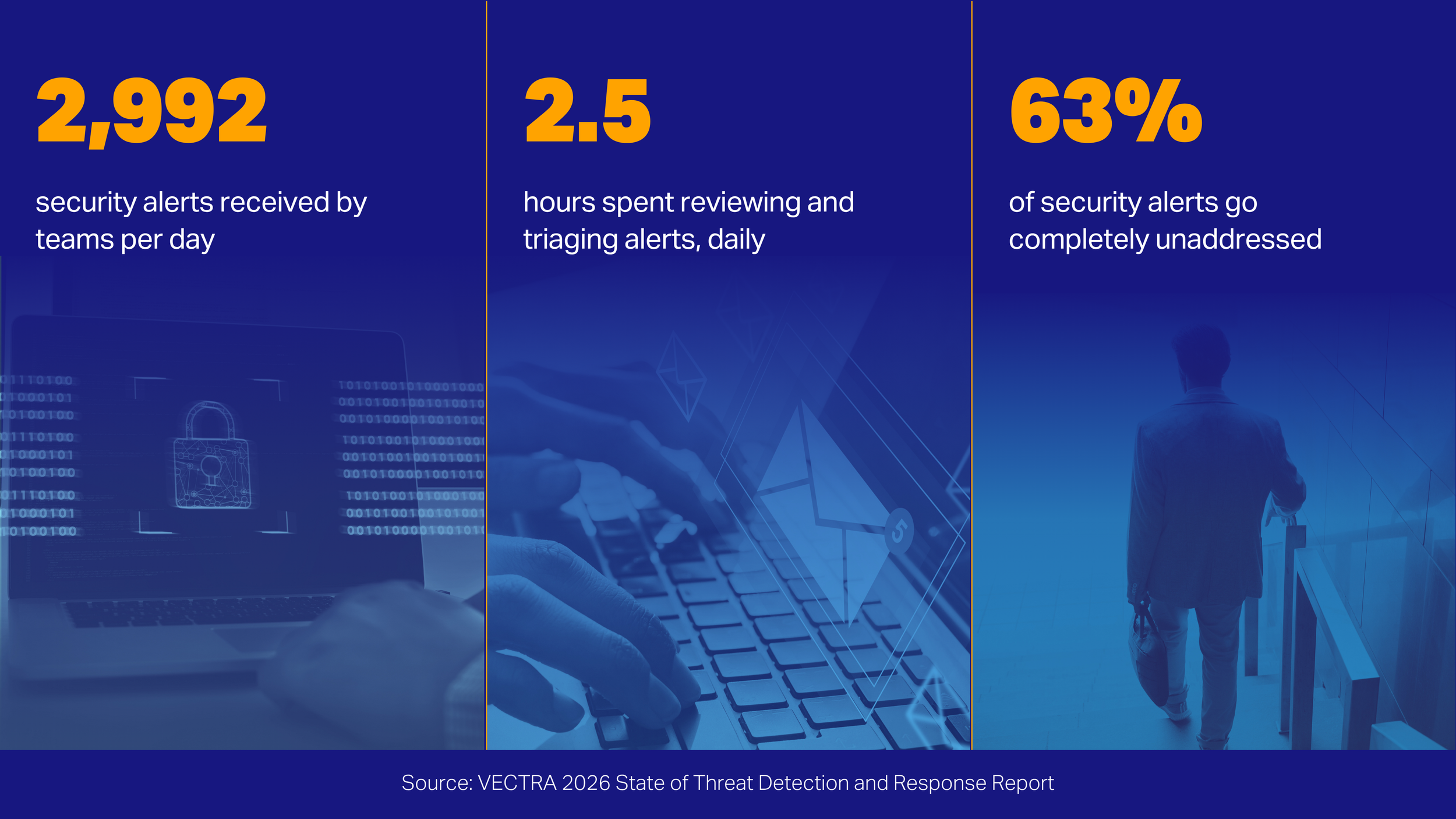
Vulnerability management prioritization is one of the most relentless challenges facing IT and cybersecurity professionals today. According to a 2026 report from Vectra, teams receive nearly 3,000 alerts daily, with 63% going unaddressed. Just under half of them spend over three hours a day in triage mode, and say that it’s simply not possible to keep up with the increasing number of security threats.
The problem clearly isn’t an issue of visibility, but of deciding which alerts are worth immediate attention.
“A lot of clients come to us feeling overwhelmed and aren’t sure where to begin,” says Eddie Moncada, Modern Security Consultant at IX Solutions. “But technically, it doesn’t need to be complicated. It’s usually more an issue of time and pinpointing your most important assets.”
Catching and addressing every single flaw in your environment isn’t realistic. What matters is having a repeatable process that enables you to confidently focus on issues that will have the greatest impact on risk reduction.
Here, we’ll unpack what teams often get wrong and how to create an effective strategy for vulnerability management.
What Is Vulnerability Detection and Response?
Vulnerability detection and response is the ongoing process of finding security weaknesses in your environment, assessing and triaging them, and fixing them before they can be exploited.
Vulnerabilities include everything from misconfigurations to unmanaged devices. However, Moncada says that the day-to-day work for most IT and security departments centres on identifying and triaging software weaknesses that can be remediated through patching.
“When people talk about vulnerability detection and response, and especially the Common Vulnerability Scoring System (CVSS), they’re mostly concerned with patch management.”
Why Teams Get Overwhelmed
When it comes to vulnerability detection and response, a core challenge is finding the time to triage and apply a backlog of vendor-issued patches. In Moncada's experience, organizations typically fall into one of two camps here. Some don’t engage in a vulnerability or patch management process at all. The ones who do often get burned out chasing Common Vulnerabilities and Exposures (CVEs) based on how scary they look.
It's easy to see why organizations fall into this trap. As alerts flood in, the instinct is to tackle those with the highest CVSS scores first. The problem is that staff will still never have time to patch them all, and ratings don't account for your specific environment. Without that context, IT can spend precious time closing vulnerabilities without making a dent in their overall posture.
How to Approach Vulnerability Management Prioritization
A better strategy is to use risk-based vulnerability management, which considers context beyond CVSS. It follows a similar principle to avoiding tool sprawl: just as adding more tools doesn't automatically improve security posture, addressing as many high-severity vulnerabilities as possible doesn't always reduce real risk. In either case, success comes from understanding what's most important and focusing your efforts there.
This sounds simple enough, but it’s actually much easier said than done. Knowing how to prioritize vulnerabilities is highly contextual, and there’s no one-size-fits-all framework. What makes sense for one business might be completely wrong for another, depending on its environment, assets, and risk profile.
“It can be very tricky to figure out what needs to be addressed first,” says Moncada. “It’s the main reason why I’ve never seen a client come to us with a proper strategy in place.” As a starting point, Moncada recommends answering two questions—in this order—before the CVSS score enters the conversation:
Which devices and systems are most important to your business operations and goals? Judging this requires a collaborative effort between stakeholders who have a deep understanding of the environment and how different assets interact with each other.
Is the vulnerability being publicly exploited? Even a severe score may not be the most urgent if the weakness requires highly specific conditions. On the other hand, vulnerabilities with publicly available exploit code should move higher on the priority list because they're far more likely to be targeted.
Vulnerability Detection and Response in Practice
While every environment is different, these examples help illustrate how a prioritization framework could be applied day-to-day:
Example 1: A Critical Business System
A manufacturer identifies its production systems as its most critical assets because every hour of downtime affects revenue and customer deliveries. When a low-CVSS vulnerability is discovered on a production server, it's pushed ahead of a high-CVSS vulnerability affecting an office workstation with minimal business impact.
Example 2: A Vulnerability Under Active Exploitation
A system administrator is reviewing two critical vulnerabilities with nearly identical severity scores. One affects an internet-facing VPN appliance and appears in CISA's Known Exploited Vulnerabilities catalogue, with working exploit code circulating publicly. The other affects an internal line-of-business application reachable only from the corporate network, with no evidence of exploitation anywhere. The appliance is patched first, since it's exposed, it's a known target, and attackers already have a proven path in.
Example 3: High-Risk Users
IT notices that a particular user group consistently scores lower on phishing simulations than the rest of the organization. When a browser vulnerability affecting those users' laptops is disclosed, their endpoints are patched first to reduce the likelihood of an attacker gaining an initial foothold.
What Effective Vulnerability Detection and Response Looks Like
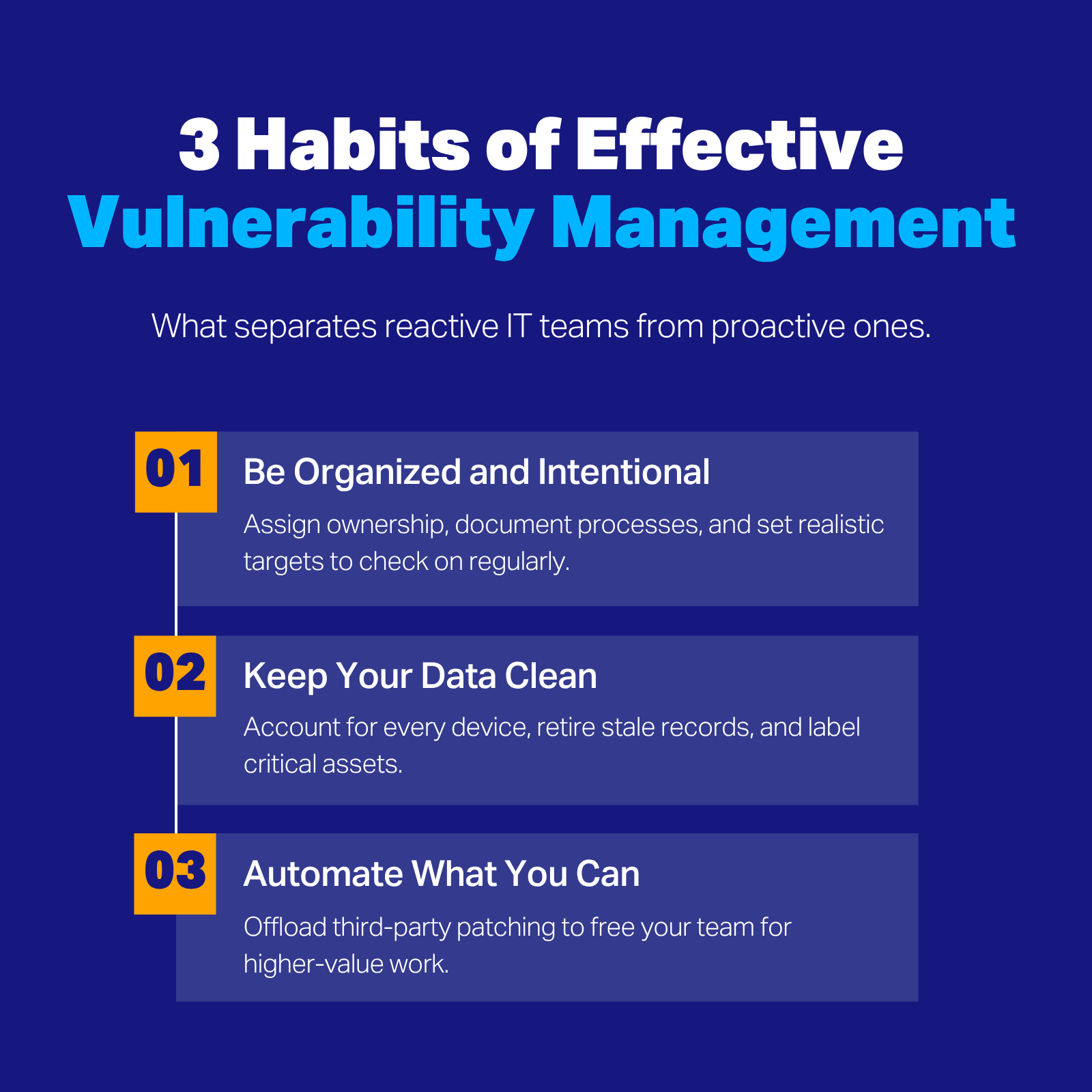
The above examples show how different teams might prioritize vulnerabilities based on their unique circumstances. But regardless of your environment, Moncada says effective programs tend to share the following best practices.
"Every organization should be working toward these habits, but it's important not to overthink things," he stresses. "Instead of aiming for perfection, just aim to get 1% better each month."
Have an Organized, Intentional Approach
Vulnerability management shouldn't be an "off the side of your desk" task. Even if you don't have cybersecurity staff, assign roles and responsibilities to individuals. Document what you're working on in a platform like Microsoft Defender, or even a simple spreadsheet. Effective teams also work toward realistic targets—such as patching a set number of vulnerabilities each week—and schedule regular meetings to check progress and adjust priorities.
Keep Management Platforms Clean and Current
Vulnerability management solutions, such as those in Microsoft Defender, can make it easier to track vulnerabilities and measure your exposure. However, they’re only as effective as the data they receive. To get the most value from a tool like Defender, Moncada recommends:
Ensuring everything is accounted for. Devices and systems that aren't reporting into the system can create dangerous blind spots.
Keeping your inventory up to date. Remove stale or retired devices so your metrics are accurate and staff doesn’t get distracted by irrelevant alerts.
Labelling business-critical assets. In Defender, this allows you to quickly filter high-priority vulnerabilities and surface richer threat intelligence for them, like publicly available exploits.
Automate Third-Party Patches Where Possible
Patching applications external to a Microsoft environment, like Adobe Reader or Zoom, often requires significant manual effort. “I’ve seen IT professionals spend half their workday just packaging, testing, and deploying third-party patches,” says Moncada.
A patch management solution, such as Patch My PC, can automate much of that process. This helps reduce burnout and gives IT staff more time for higher-value work, like learning more about vulnerability detection and response or refining their prioritization strategy.
Turn Overwhelm into Action
Vulnerability detection and response is just one part of a strong cybersecurity program, but it's often an area where IT managers and system admins tend to struggle. If you know where to focus your time and effort, though, it can significantly reduce risk to the organization.
Engaging an experienced partner can make a big difference here. At IX Solutions, consultants work with you to identify key assets, build a prioritization framework, and give ongoing guidance as your strategy matures. Rather than handing over an off-the-shelf playbook, the goal is to create a plan that's tailored to your particular environment.
"Getting started is often the hardest part," says Moncada. "But once teams have a practical roadmap in place, they're usually able to build on it themselves. Sometimes all they need is someone to help them take that first step."
Book a consultation with IX Solutions to get your vulnerability management on track.
